White Paper
Biologics That Support Bone Healing
Introduction
Bone healing is a concert of biological and mechanical factors. Clinical use of metal hardware of structural wedges in the case of osteotomies can provide the mechanics but lack the biology. The biology can be added by using demineralised allograft products that contain bone morphogenetic proteins (BMPs).
BMPs a to stimulate and facilitate healing [1] and “discovered” by Marshall Urist [2] in his work on demineralising bone with acid solutions.
Processing methods often vary and can influence bone forming potential by the amount of BMPs and lot variation. Little information is present of BMPs present in fibre forms of allografts.
Hypothesis
Are BMPs present in PS Fibre Fill Allograft and is it consistent across different lots?
Methods
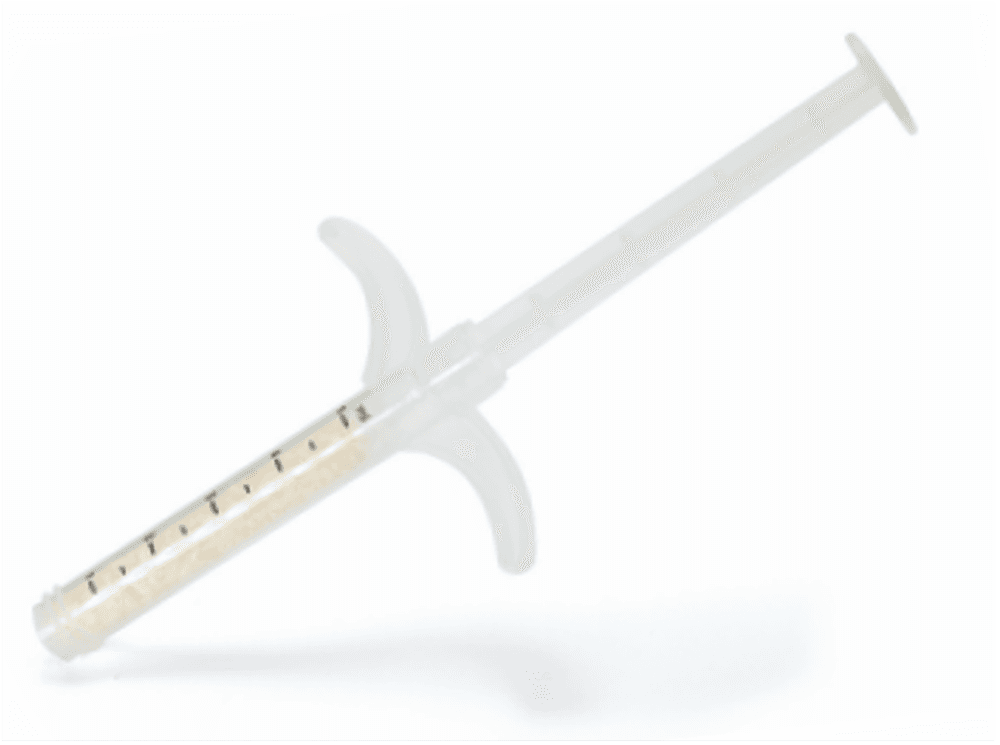
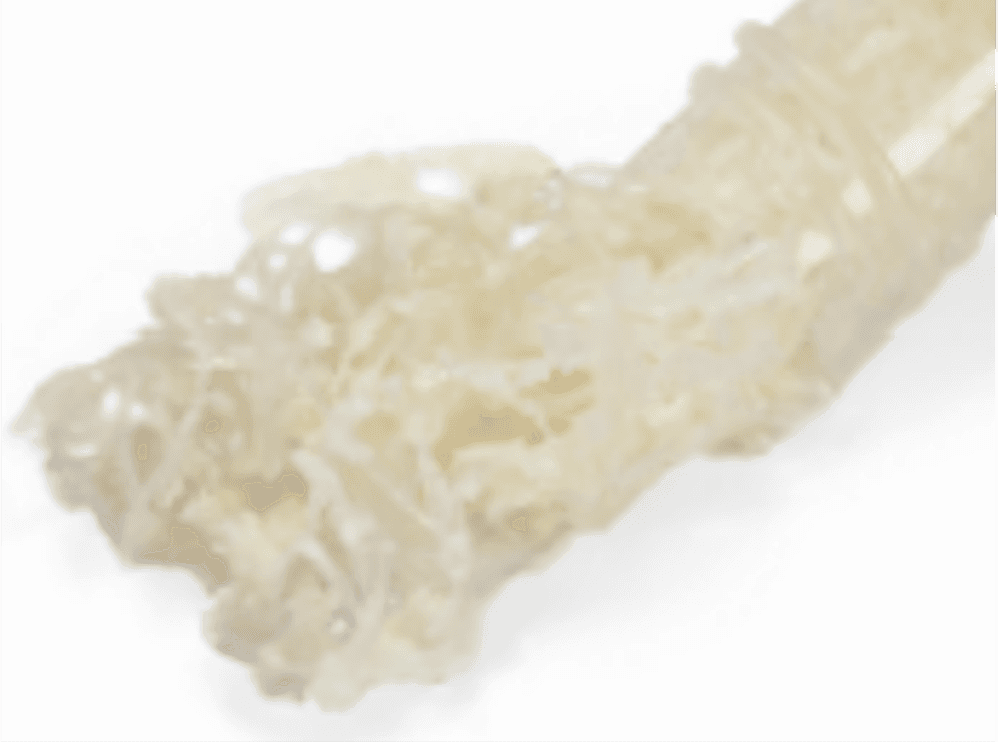
5 random lots of demineralized allograft fibres (PS Fiber Fill) (Figure 1a+b) were extracted with guanidine hydrochloride-tris buffer. BMP-2,-4 and -7 content measured using an enzyme-linked immunosorbent assay (ELISA) [ref]. This is a standard laboratory technique used to detect and quantify specific proteins, antibodies, or other molecules in a sample by using antibodies and enzymes.
Figure 1a | Figure 1b |
|---|---|
 |  |
Results
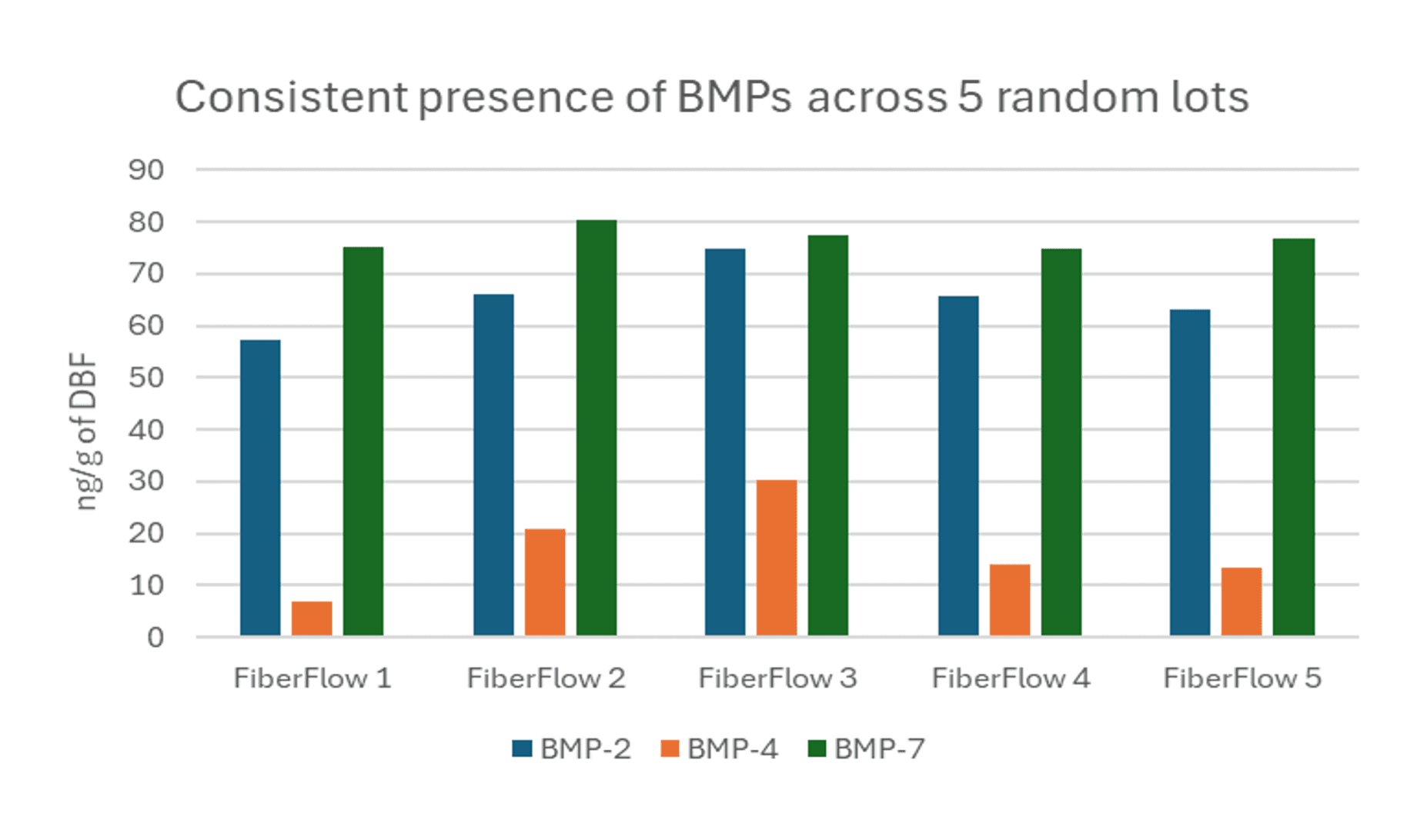
Results support that the processing of the PS Fibre Fill retains BMP-2, -4, and -7 in all samples (Figure 2).
Conclusions
The study demonstrates that BMP-2, -4, and -7 were consistently present across the 5 random lots of PS Fibre Fill. The amounts found are comparable with the inductive DBM literature [3].
Literature
Urist, M. R. (1965). Bone: Formation by Autoinduction. Science 150 (3698), 893–899. doi:10.1126/science.150.3698.893
Chiari, C. (2020). Recombinant Human BMP6 Applied Within Autologous Blood Coagulum Accelerates Bone Healing: Randomized Controlled Trial in High Tibial Osteotomy Patients. Journal of Bone and Mineral Research, Vol.35, No.10, October 2020 ,pp1893–1903. DOI:10.1002/jbmr.4107
Pietrzak, W.S. (2015). The Extraction and Measurement of Bone Morphogenetic Protein 7 From Bovine Cortical Bone as a Function of Particle Size. J Craniofac Surg. 2015 Jan;26(1):296-9. doi: 10.1097/SCS.0000000000001301.
Original Research
Post-operative knee adduction moment is associated with patient-reported outcome improvements after medial opening wedge high tibial osteotomy
Original Research
Quantifying Multiplanar Alignment Errors From Patient‐Specific Guide Malpositioning in Medial Opening Wedge High Tibial Osteotomy
Original Research
A newly developed patient-specific instrumentation system achieves consistent alignment accuracy in varising knee osteotomy
Original Research
Accurate and reproducible coronal and sagittal alignment correction using patient-specific instrumentation in medial opening wedge high tibial osteotomy
Original Research
A validated method accounting for joint line convergence angle reduces planning errors in medial opening wedge high tibial osteotomy
Original Research
Accurate correction with a novel patient-specific instrument for medial opening wedge high tibial osteotomy
White Paper
Allograft Wedges Biomechanical Impact